


23 Apr 2026
Share on:


World Veterinary Day 2026 highlights veterinarians as key guardians of food safety, public health and animal wellbeing. This day is an opportunity to recognize their impact—not only in clinical practice, but across the entire food chain.
At Ceva, this role is deeply connected to the concept of One Health, where animal health, human health and environmental sustainability are inseparable.
Today, we follow a field veterinarian through a full working day, to better understand how their daily work directly contributes to food safety and global health.
6:30 am – Before the farm: data, analysis and early decisions
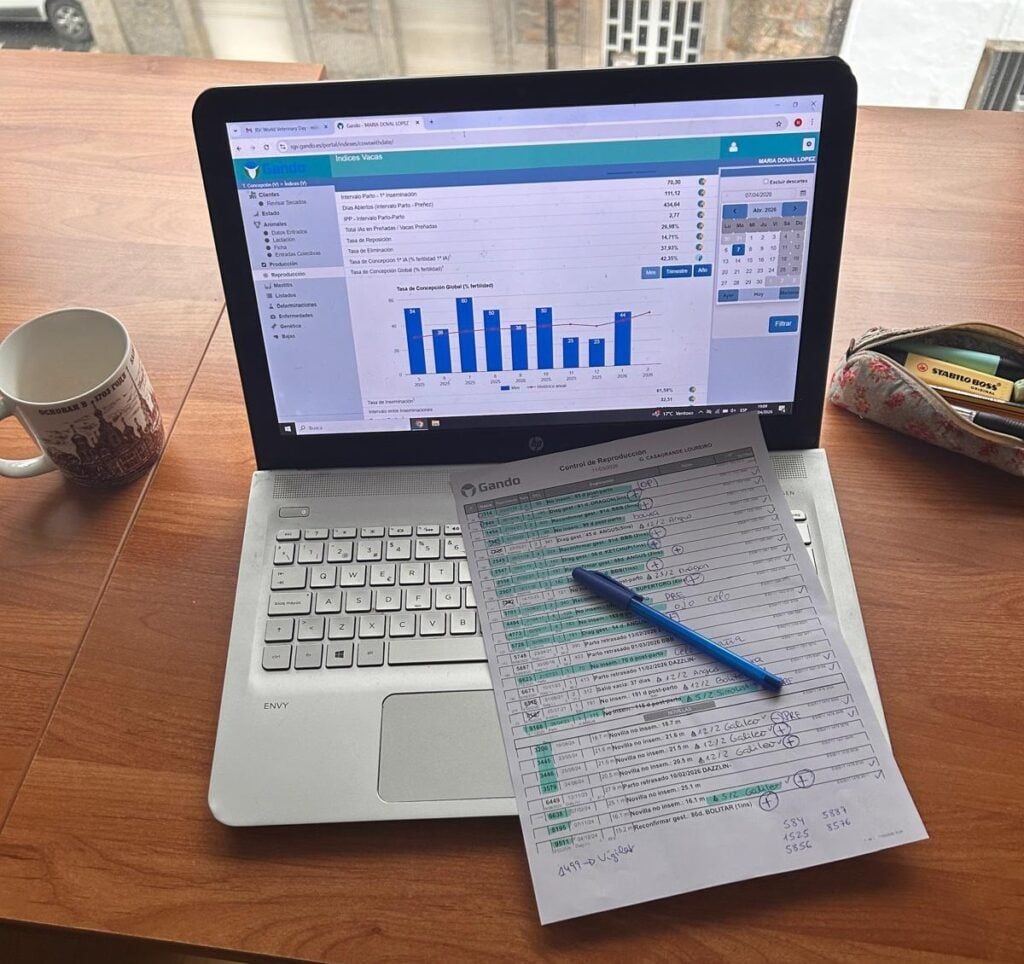
As the day begins, the work is already underway long before arriving at the farm. For Isabel Salillas, the morning starts in front of the computer, analyzing key production data.
This work doesn’t start on the farm, it starts much earlier, with information, with data analysis and with decisions made before putting on your boots.
This early stage defines the entire day ahead.
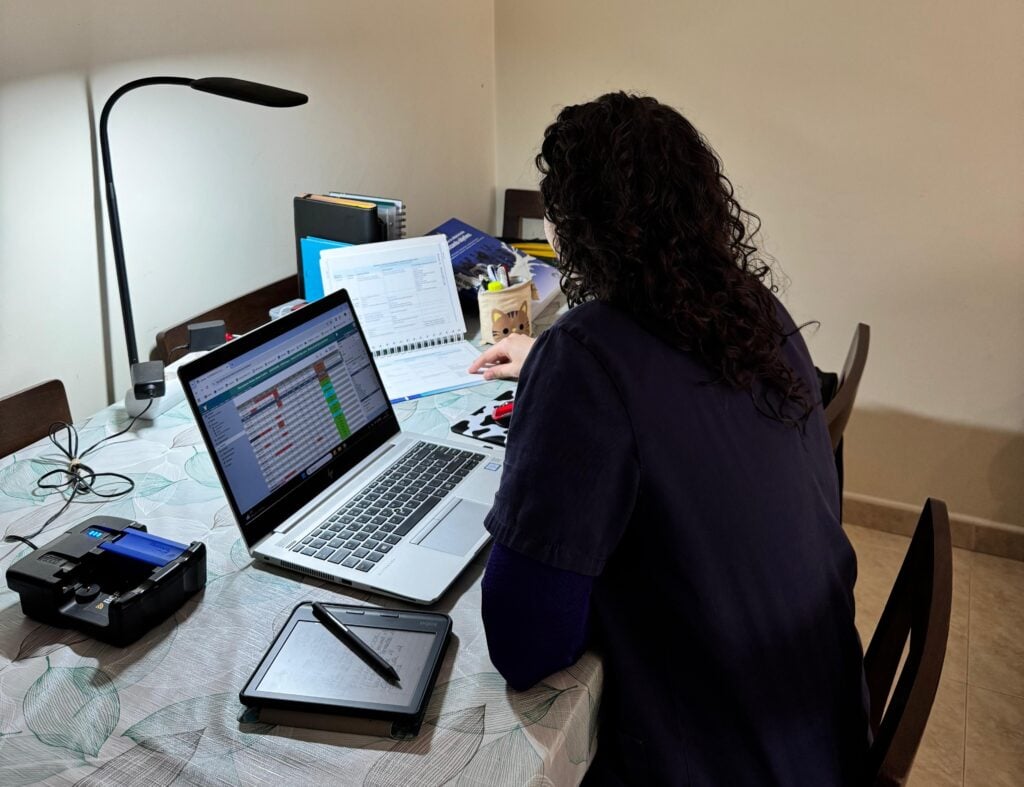
Farm work doesn’t begin in the field — it begins with interpretation, anticipation and decision-making. This preparation allows veterinarians to arrive already knowing what to look for, turning data into action.
08:00 am – On the road: entering the rural landscape
The transition from desktop to field begins on the road, moving between farms across rural territory.
For Noelia González, this journey is part of the experience itself. Her work takes place across diverse realities: from traditional small farms to larger, growing operations led by a new generation of farmers.
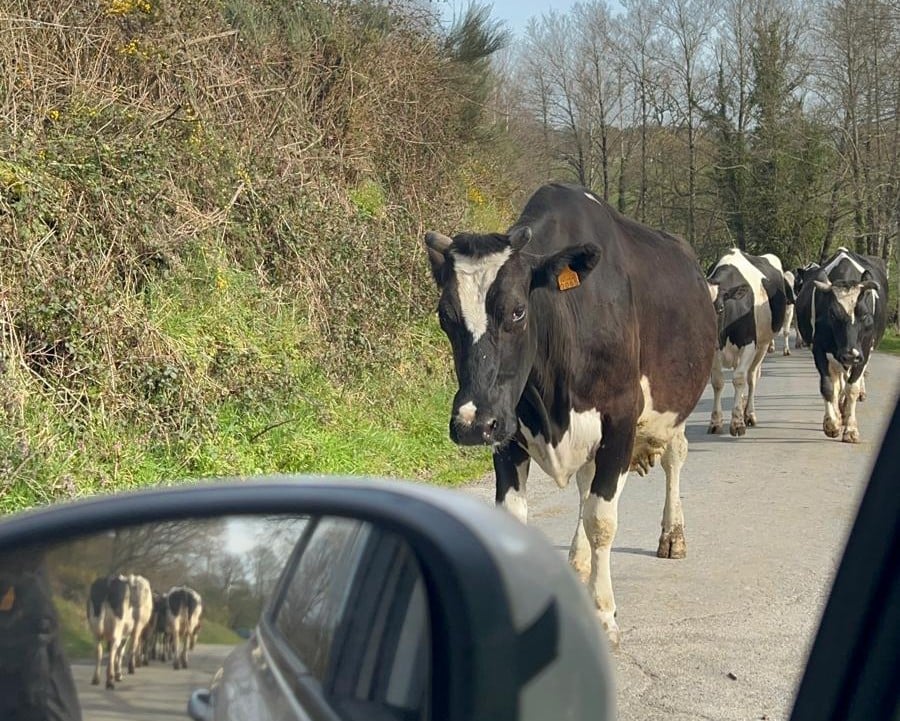
The morning starts in family farms, where sometimes, once we finish checking the cows, there is coffee waiting in a wood-burning kitchen.
It is a landscape she never stops observing.
I still find myself stopping the car just to watch cows grazing in the fields.
11:00 am – Inside the farm: reproduction, diagnosis and precision work
Mid-morning is where clinical veterinary work becomes most intense. Reproductive control through transrectal ultrasound is a core part of the visit: evaluating postpartum recovery, diagnosing pregnancies, monitoring ovaries and detecting corpus luteum activity.
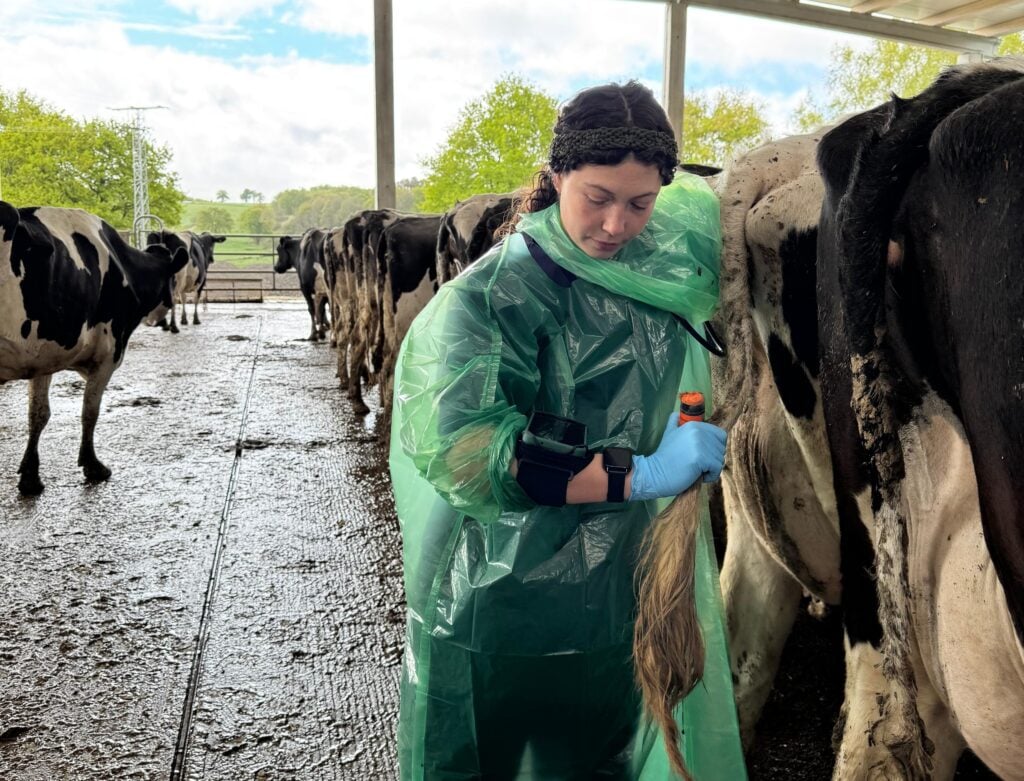
A single day can include very different realities.
A 42-day pregnancy, perfect, with no apparent abnormalities — always pending confirmation.
But also more difficult moments: a fetal loss at 81 days, a diagnosis no one wants to communicate.
And between both extremes are twin pregnancies: two embryos, two heartbeats, double responsibility. Not something to celebrate, but to manage due to the higher risks of abortion, retained placenta, freemartin syndrome or reduced performance in the next lactation.
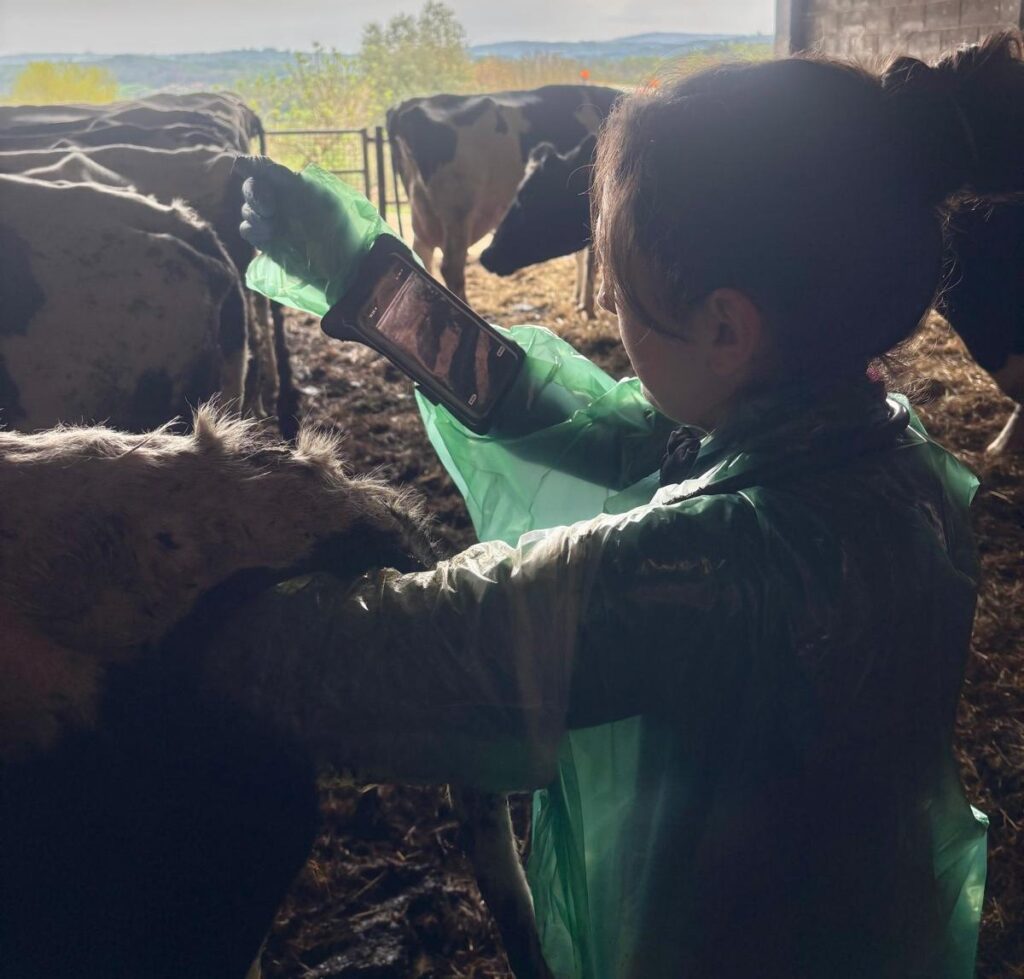
What you don’t see, you cannot manage.
This principle defines much of the work in herd health.
2:00 pm – Rearing: where the future of the farm is defined
The afternoon continues with calf rearing, one of the most sensitive stages in livestock production. Here, the future productivity of the farm is already being shaped.
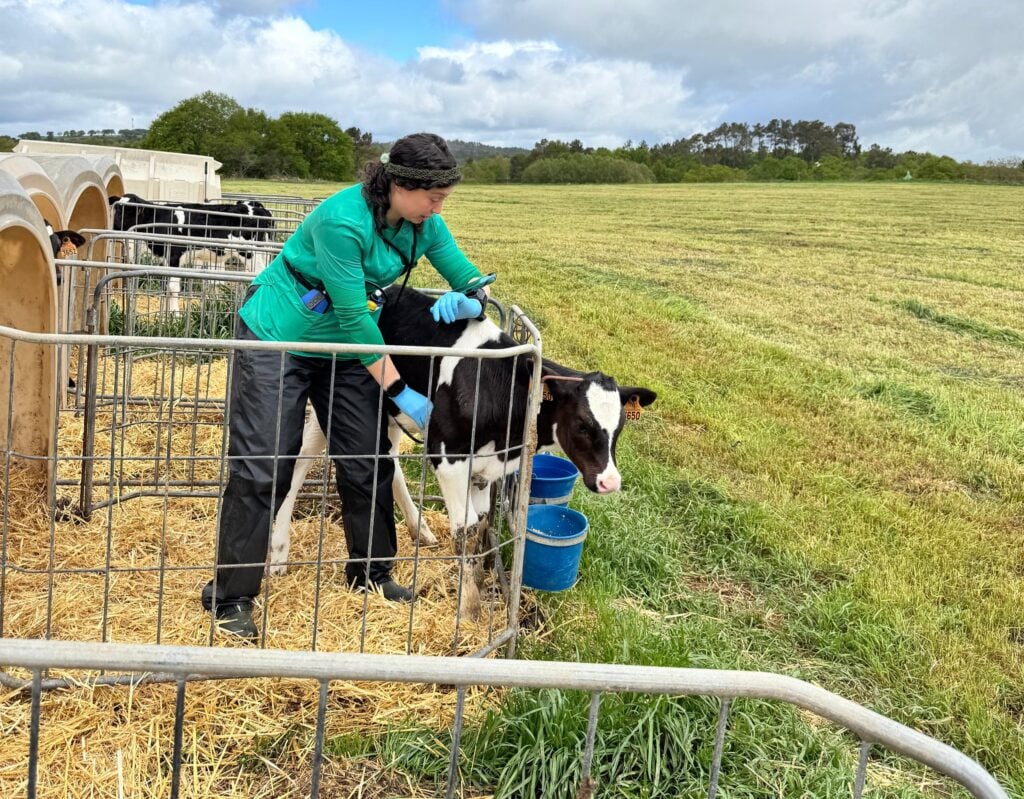
Calves may appear healthy externally while hidden issues are already developing internally.
An example of this precision work is pulmonary ultrasound grading, where lesions that are not yet clinically visible can be detected early.
Identifying subclinical pneumonia at the right time can make the difference between recovery and long-term productivity loss — with a direct impact on animal welfare and farm performance.
4:00 pm – Biosecurity, nutrition and invisible work
As farm visits progress, attention shifts to the systems that sustain herd health.
Everything that enters and leaves a farm matters: cleaning, disinfection and prevention protocols are essential to maintaining animal health.
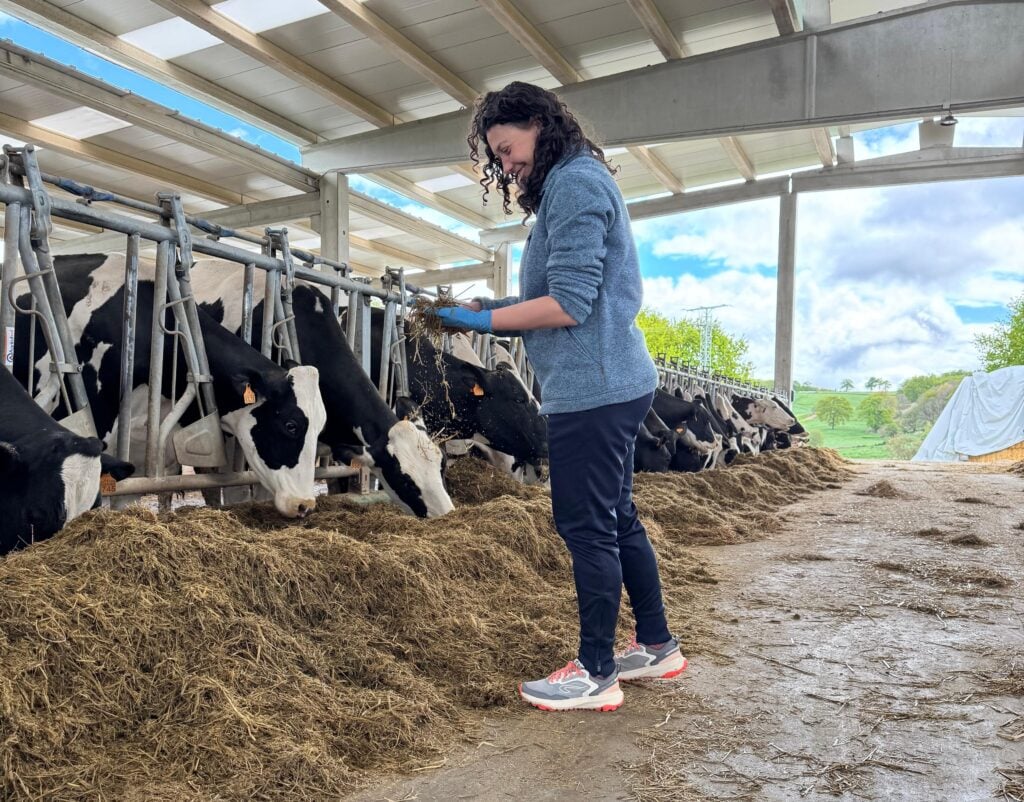
Nutrition is another fundamental pillar.
A balanced ration supports production, reproduction and overall wellbeing. A well-fed animal is not only more productive, but also healthier and more resilient.
These processes may not always be visible, but they are critical to the stability and sustainability of the system.
5:30 pm – End of the day: reflection and perspective
Even after years in the field, the connection to the environment remains strong.
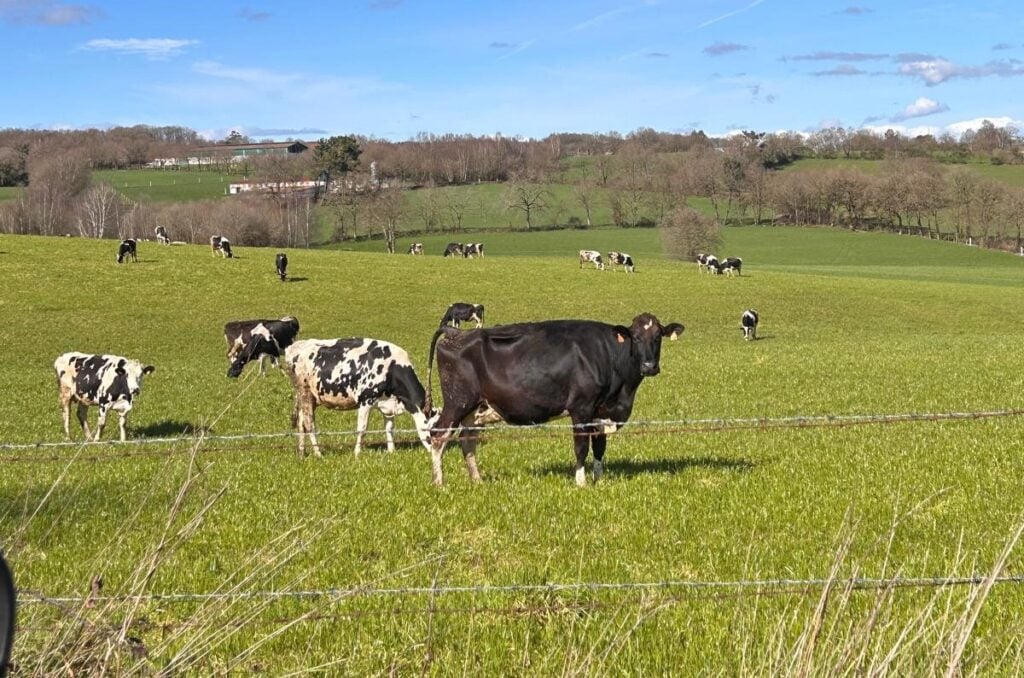
I still find myself stopping the car just to watch cows grazing in the fields.
Every farm visit is different. Every situation requires balancing science, experience and real-life conditions.
As the day comes to an end, time is dedicated to reviewing results, identifying patterns and planning next steps.
A profession shaped by science, responsibility and commitment
Field veterinarians combine data analysis, advanced diagnostics and hands-on work in livestock farms. It is a profession that demands precision, empathy and constant adaptation to real farm conditions.
World Veterinary Day is a moment to recognize their dedication—not only for what they do, but for what they make possible every day.
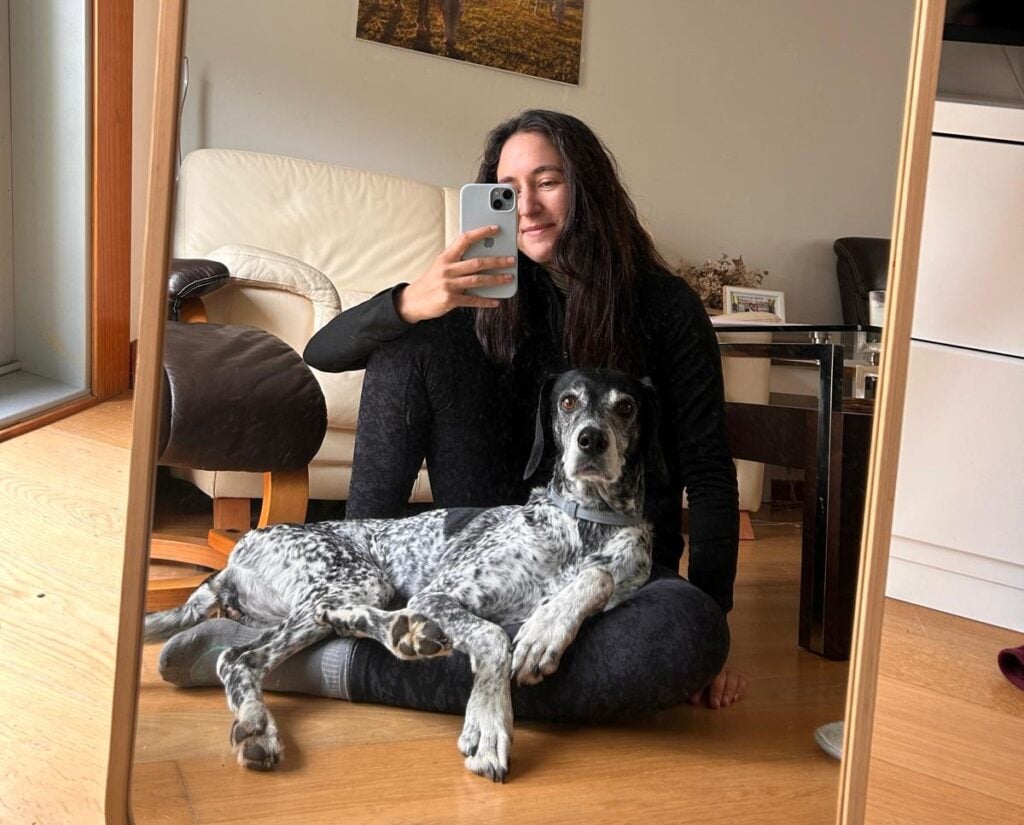
We are the voice of those who have no voice.
We would like to sincerely thank Noelia González and Isabel Salillas for sharing their daily field experience and contributing to this article.