


 Publications


Poster
Bulk tank milk surveillance for coxiellosis in the mediterranean water buffalo (Bubalus bubalis) in Southern Italy
G. Ferrara, G. Pedota, V. Vignola, A. Amato, C. Cavallo, A. Valenza, P. Pinho, P. Gisbert
Publication information
Word Buiatrics Congress 2026
Background and objective
Domestic ruminants are the main reservoirs of Coxiella burnetii (C. burnetii), the causative agent of human Q fever and a major public health issue. Although included in the category of ruminant, there is a lack of knowledge about the role of water buffalo (Bubalus bubalis) in the epidemiological cycle of C. burnetii. The purpose of this investigation was to determine the molecular and serological prevalences of C. burnetii in bulk tank milk (BTM) from water buffalo in southern Italy. The study also aimed to determine whether any differences in milk’s chemical-physical parameters were associated with C. burnetii positive results.
Materials and Methods
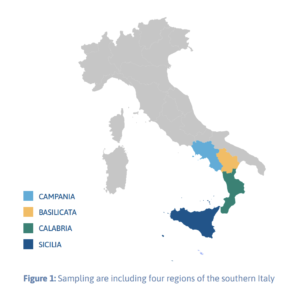
A total of 107 BTM samples were collected in four distinct regions of southern Italy (Figure 1), and evaluated for the presence of specified target genes (IS1111) using two distinct real-time PCR protocols, a commercial kit and an in-house real-time PCR (Klee et al., 2006).
The same samples were also analyzed for the presence of specific antibodies using a commercial ELISA (ID Screen® Q Fever Indirect Multispecie, IdVet).
All milk samples were tested with MilkoScan™ 7 RM obtaining a total of the 30 chemical/physical parameters analyzed.
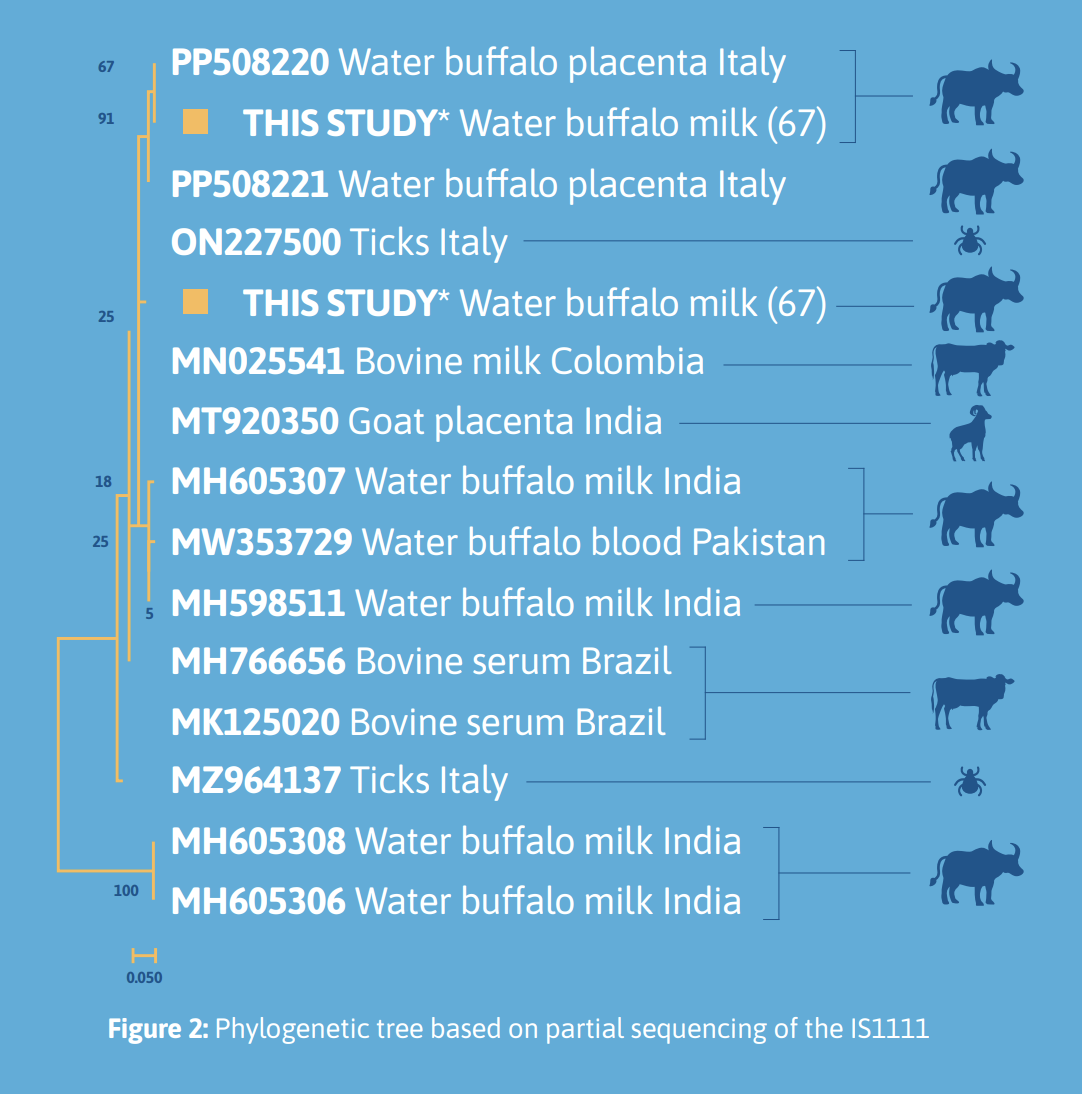
Positive mass and individual samples were tested with end-point PCR and subsequent Sanger sequencing to confirm the actual presence of Coxiella burnetii and any genomic differences with isolates already described in buffalo.
Results
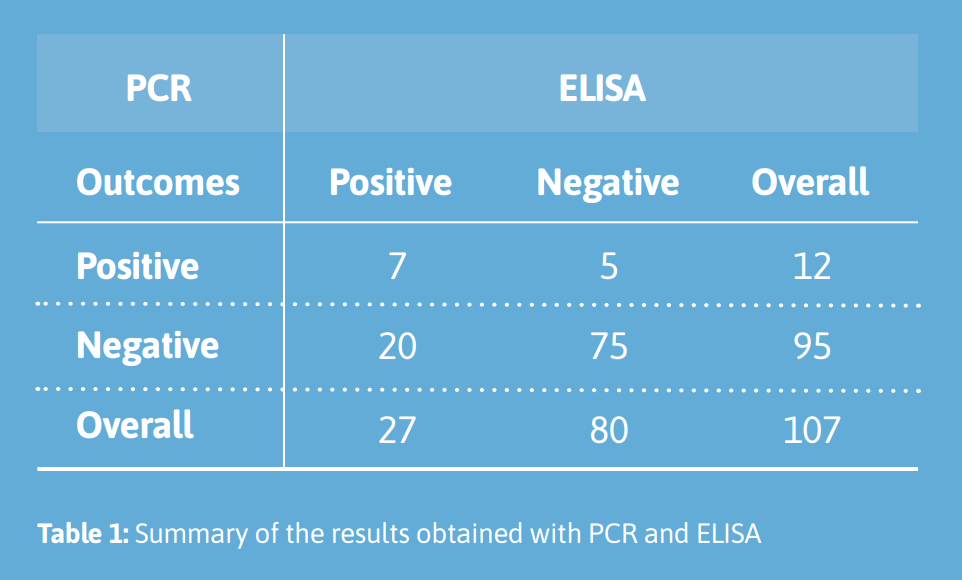
The overall molecular prevalence was 11.2% (12/107) but varied depending on the region: 28.5% in Basilicata (2/7), 9.4% in Campania (9/95), Calabria (0/2) and 33.3% in Sicily (1/3) (Table 1).
The ELISA results confirmed the widespread distribution of C.burnetii in the study area. The overall seroprevalence was 25.2 (27/107): 42.9% in Basilicata (3/7), 24.2% in Campania (23/95), 0% in Calabria (0/2) and 33.3% in Sicily (1/3) (Table 1).
Poor concordance was observed between the molecular results obtained with the commercial PCR (only 4/107 positive) and the in-house PCR (11/107).
Genotyping showed that the strains were similar to those isolated from other countries and species (Figure 2).
No statistical differences were observed in milk parameters between positive and negative farms (using both PCR and ELISA results). When the milk pools from seven farms in the Basilicata region were analyzed individually (five samples were collected from each farm standardizing the number of lactations and the days of lactation), significant variations were observed in the percentages of total fat (especially CFA, SCFA, SFA, and palmitic acid) and ST%. The same has been observed considering the ELISA results.
Conclusions
- This study found C. burnetii circulation in the buffalo population in southern Italy, with a slightly lower prevalence compared to other reservoir species.
- Positive herds showed no significant changes in BTM characteristics, however individual fat percentages varied significantly.
- Although there is not enough evidence that C. burnetii causes mastitis, evidence of milk changes in Coxiella-positive animals was shown in this study. These alterations can alter milk quality or cheesemaking ability.
Our booklet of abstracts brings together Ceva’s scientific contributions to the World Buiatrics Congress 2026.



Share this publication:


