


 Publications


Poster
Recombinant equine chorionic gonadotropin enhances out‑of‑season reproductive performance of artificially inseminated ewes: effects on follicular dynamics, ovulation synchrony, and fertility in Aragonesa and Merino ewes in Spain and South Africa
Federico Randi, Antonio Spezzigù, Francesca Daniela Sotgiu, Thomas Blondel, Theo Erasmus, Villemien Jooste, Frans Jooste, Jose Alfonso Abecia
Publication information
Word Buiatrics Congress 2026
Background and objective
Artificial insemination (AI) is widely used to accelerate genetic progress and improve reproductive efficiency in sheep. However, the use of natural equine chorionic gonadotropin (eCG) raises animal‑welfare concerns. These studies aimed to evaluate the efficacy of recombinant eCG (reCG) in improving reproductive performance in two ewe breeds inseminated out of the breeding season.
Materials and Methods
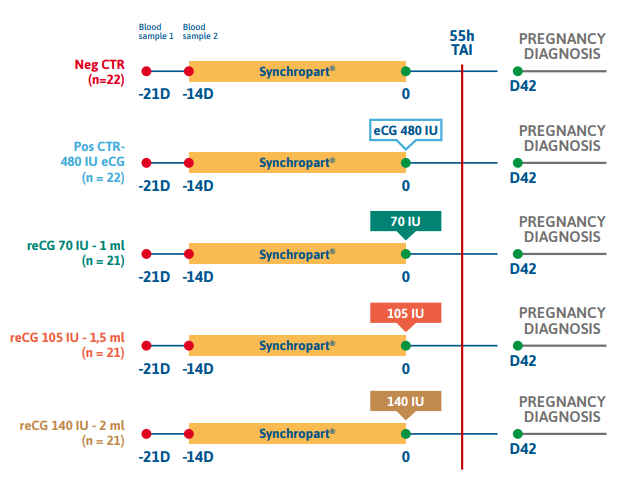
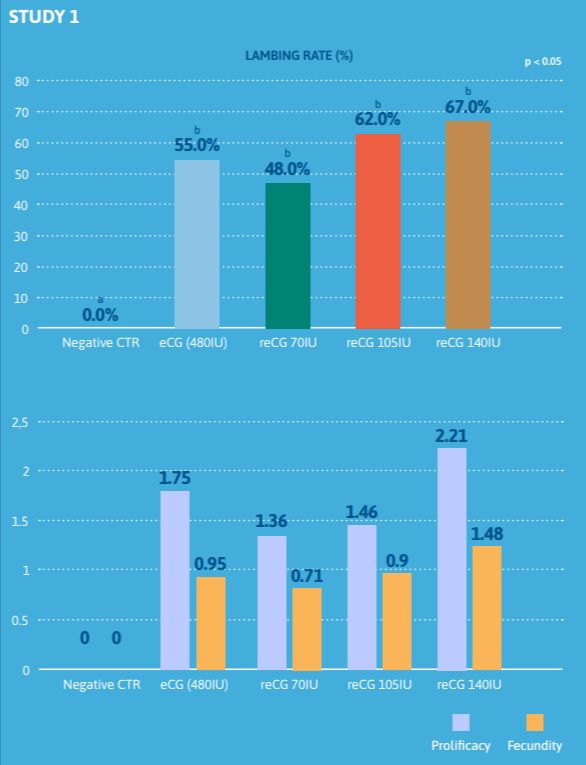
1. A total of 107 Aragonesa ewes were synchronized using a 12‑day FGA sponge protocol and assigned to five groups: Negative Control, Positive Control (480 IU natural eCG, ynchropart ® PMSG, Ceva Sante Animale, France), and reCG at 70, 105, or 140 IU (Foli-Rec® Ceva Sante Animale, France). Cervical AI with fresh semen was performed 55 hours after sponge removal, and pregnancy was diagnosed 40 days later.
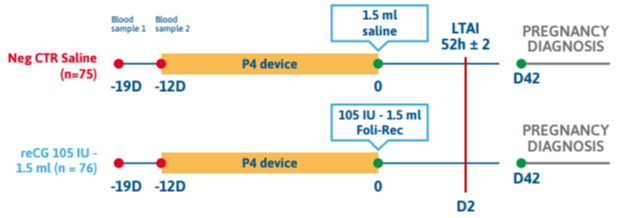
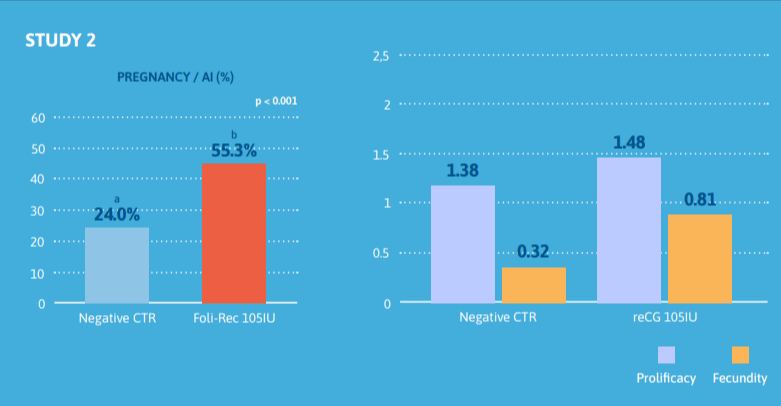
2. A blinded, parallel‑group trial included 151 Merino ewes subjected to a 12‑day progesterone‑based protocol. At device removal, ewes received either saline (Negative Control, n=75) or 105 IU reCG (Treatment, n=76) (Foli-Rec® Ceva Sante Animale, France). Laparoscopic AI with frozen semen was performed 52 ± 2 hours later. Pregnancy was assessed at Days 35– 42 and 60–65, with monitoring continued until lambing.
Results
Conclusions
Recombinant eCG effectively enhances reproductive performance in out‑of‑season AI programs, delivering improved pregnancy rates and demonstrating clear dose‑dependent effects. As a welfare‑friendly alternative to natural eCG, reCG offers a promising tool for sustainable genetic progress in sheep.
Our booklet of abstracts brings together Ceva’s scientific contributions to the World Buiatrics Congress 2026.



Share this publication:


