


 Publications


Poster
Timed Embryo Transfer Success in Lactating Dairy Cows Using Fresh In-Vitro Produced Embryos Fertilized with Conventional or Sex-Sorted Sperm
Eliza Murphy, Alan Crowe, Louise Thomson, Stephen Moore, Federico Randi, Edward Hordern, Barbara Bertholdi, Federico Randi, Eber Rojas Canadas, Patrick Lonergan, Stephen Butler
Publication information
Word Buiatrics Congress 2026
Background and objective
Efficiency of in vitro embryo production and subsequent embryo transfer outcomes in dairy cattle can be influenced by donor type, semen type, and recipient fertility. This study aimed to:
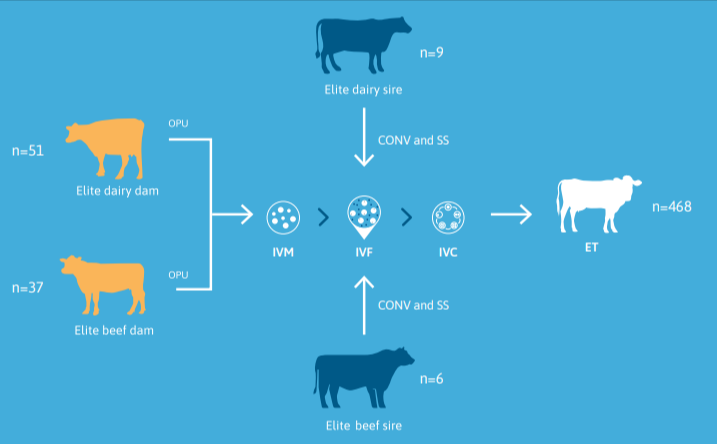
1. Compare in vitro embryo production using conventional or sex sorted semen to fertilize oocytes collected from high genetic merit beef and dairy donors.
2. Evaluate pregnancy outcomes in lactating dairy cows following transfer of fresh embryos produced using conventional or sex sorted semen after timed embryo transfer.
Materials and Methods
Oocytes were collected weekly for four consecutive weeks from elite beef and dairy donors using ultrasoundvguided ovum pickup. After in vitro maturation, oocytes underwent fertilization with frozen–thawed conventional or sex sorted semen from proven fertility sires and were cultured to the blastocyst stage.
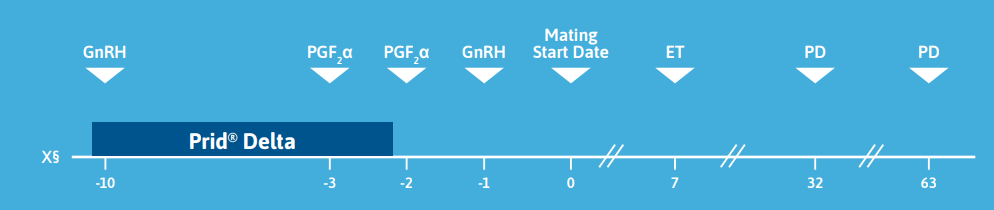
A total of 507 Grade 1 blastocysts, either fresh or previously frozen, were transferred to lactating dairy cows recipients synchronized with a PRID based protocol (PRID Delta®, Ceva Sante Animale, Libourne, France). Recipients were blocked by parity, days in milk, and genetic merit, then randomly assigned to receive an embryo derived from beef or dairy donors fertilized with conventional or sex sorted semen.
Pregnancy diagnosis was conducted via transrectal ultrasonography on day 32 after synchronized estrus and confirmed on day 63. Pregnancy loss was defined as loss between the two examinations.
Results
Beef donors yielded more oocytes per collection session, a higher proportion of blastocysts, and a greater number of blastocysts per fertilization session compared with dairy donors. Blastocyst development was similar between fertilizations performed with conventional or sex sorted
semen, including comparisons using semen types from the same sire.
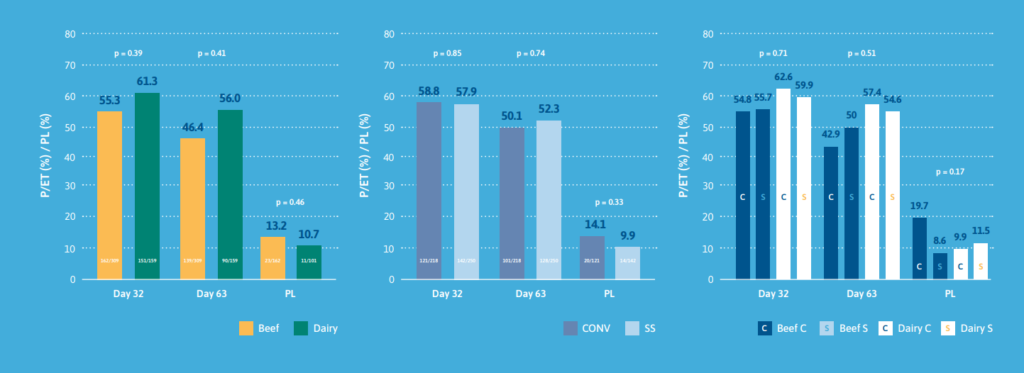
Pregnancy rates at day 32 and day 63 did not differ between embryos originating from beef or dairy donors, nor between embryos produced using conventional or sex sorted semen. Pregnancy loss did not differ among groups. Serum progesterone concentration on day 7 was not associated with pregnancy status at either time point.
Conclusions
Beef donors demonstrated higher oocyte recovery and blastocyst production compared with dairy donors. Embryo development was comparable between fertilizations performed with conventional and sex sorted semen. Pregnancy outcomes following transfer of fresh embryos were similar regardless of donor type or semen type. These findings support the use of sex sorted semen for in vitro embryo production without compromising embryo development or pregnancy success in synchronized lactating dairy cows recipients.
Our booklet of abstracts brings together Ceva’s scientific contributions to the World Buiatrics Congress 2026.



Share this publication:


