


 Publications


Poster
Field evaluation of safety of an inactivated vaccine against EHD‑8 in pregnant and lactating dairy cows
Pedro Pinho, Sophie Brilland, Philippe Gisbert
Publication information
Word Buiatrics Congress 2026
Background and objective
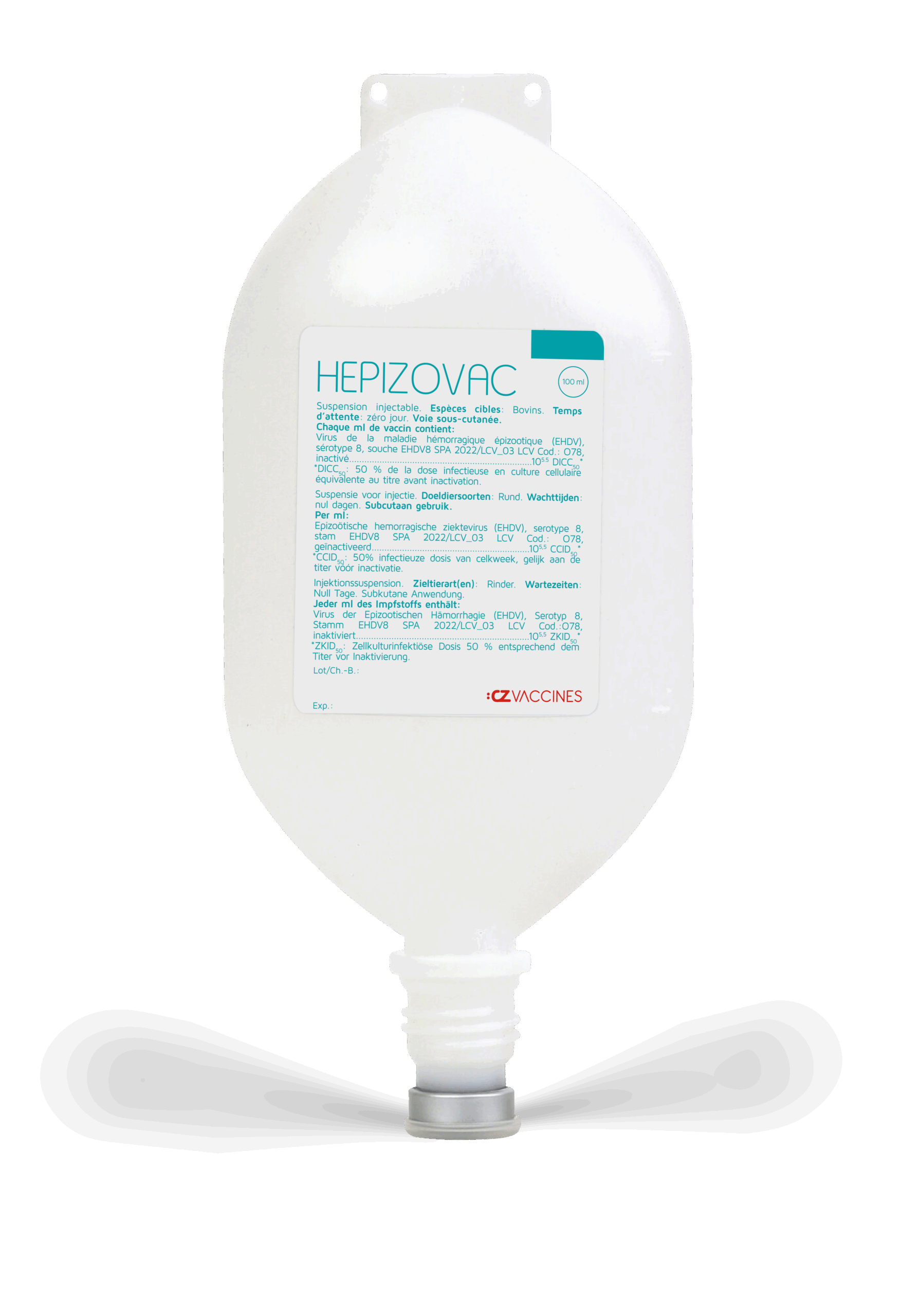
Epizootic Haemorrhagic Disease serotype 8 (EHD-8) emerged in Southern Europe in 2023, leading to the rapid development of Hepizovac®, an inactivated vaccine against the virus responsible for the disease (EHDV-8). Market authorization studies reported good tolerance and no major adverse events; however, no data was available on its administration in pregnant and lactating dairy cows.
This study was therefore conducted to assess the safety of the vaccine in this specific animal category.
Materials and Methods
This study was approved by the Ceva Santé Animale Ethics Committee under number CFAEC-2024-24. The animal phase lasted from December 2024 to February 2025.
The study was conducted on two dairy farms in northern France, a region free of EHD.
A total of 36 pregnant and lactating Prim’Holstein cows, aged over 30 months and 5–6 months pregnant, were enrolled.
Animals were randomly assigned to two groups:
- Group 1 received two 4-mL subcutaneous injections of Hepizovac® administered three weeks apart (n=18)
- Group 2 received two 4-mL subcutaneous injections of NaCl 0.9% administered three weeks apart (n=18)
Clinical examinations, rectal temperatures and local reactions were recorded before each vaccine injection (D0 and D21) and for three days after each injection (D1, D2, D3, D22, D23 and D24).
Results
- No major adverse effects were observed in both groups.
- One premature calving was recorded after the second injection, but no link to vaccination was established.
- No hyperthermia above 39.5 °C was observed in either group after injections.
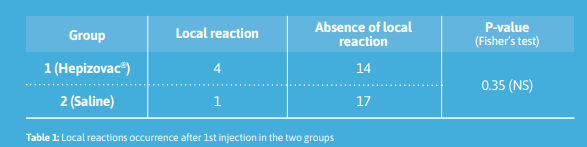
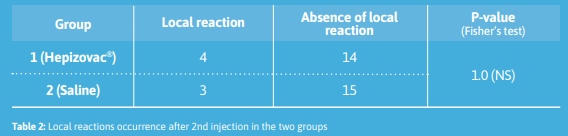
- Local reactions consisted mainly of small nodules at the injection site in the two groups. After first injection, 4 animals were concerned in the vaccinated group and one in the control group (Table 1). After the second injection, 4 and 3 cows had small nodules in the vaccinated and the control groups, respectively (Table 2).
Conclusions
- Under field conditions, Hepizovac® is well tolerated in pregnant and lactating dairy cows.
- These findings confirm previous market authorization data and are consistent with results from parallel studies conducted in dairy heifers in endemic areas.
Our booklet of abstracts brings together Ceva’s scientific contributions to the World Buiatrics Congress 2026.


Share this publication:


